Invasive Species Risk from LNG Tanker Traffic in the Gulf of California
Issue Brief: Ballast water, biofouling, and the case for prevention
The Gulf of California (GoC) is a UNESCO World Heritage Site (2005) and includes Important Marine Mammal Areas (IMMAs) designated by the International Union for Conservation of Nature. It supports extraordinary biodiversity, including 39% of all marine mammal species, eleven species of whales, 891 fish species, and five of the world’s seven sea turtle species. The GoC supports 57% of Mexico’s national marine fisheries production and sustains a thriving marine ecotourism sector valued at approximately $518 million USD annually.
Invasive species are non-native organisms that are in-troduced and capable of establishing in environments where they do not naturally occur. When they become invasive, they can cause significant environmental, ecological, economic, and public health impacts. In new habitats, invasive species often lack the predators and ecological controls that limit them in their native ranges, allowing populations to expand rapidly. They can outcompete native species, alter habitat structures, disrupt food webs, and trigger cascading ecosystem effects threatening native and migratory species and creating risks for marine dependent coastal communities.
This issue brief draws from a report commissioned by Equal Routes assessing the impacts of ballast water and biofouling from projected liquefied natural gas (LNG) vessel traffic in the Gulf of California.
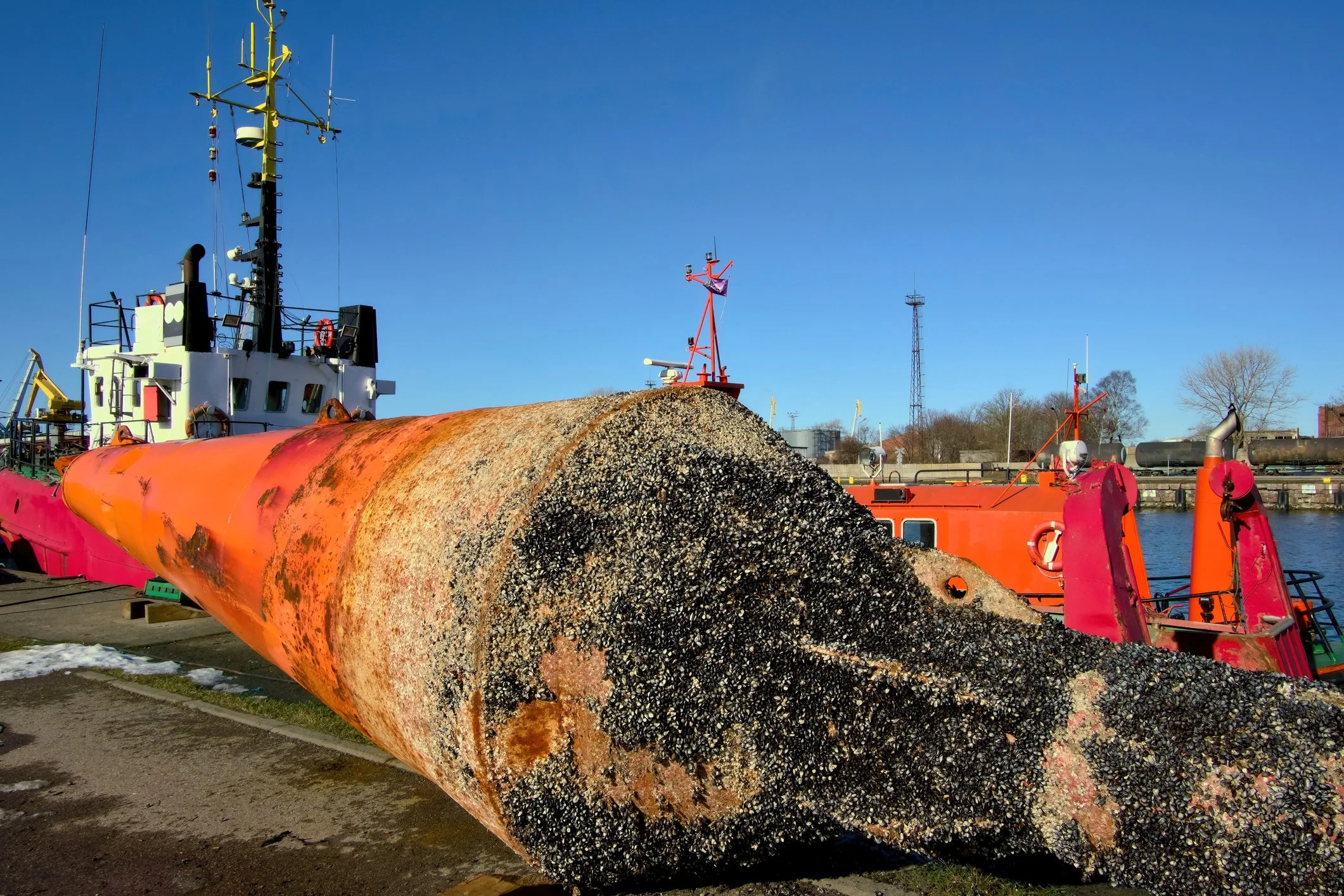
Source: IStock, Buoy covered with marine growth
