Just and Equitable Transition in the South Pacific
An interview with John Taukäve on sound, shipping, and oceanic leadership
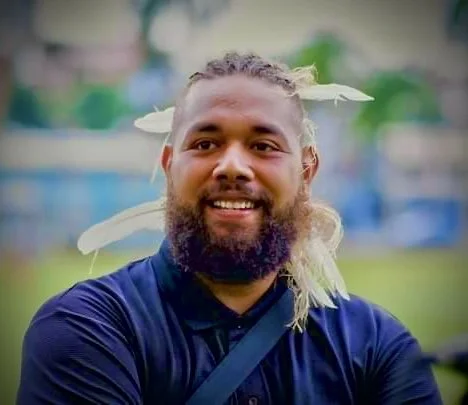
John Taukäve is a Rotuman and Fijian artist, researcher and advocate, whose work bridges culture and climate leadership. He works as a cultural ambassador and technical advisor for Pacific delegations at the International Maritime Organization. John brings lived experiences of Pacific Island communities, descendants of the world’s most advanced ocean voyagers, into IMO negotiations.
This dialogue expands on John’s contribution to the Just Energy Transition (JET) case study featured in Equal Routes’ forthcoming report, Charting the Course to a Quiet Ocean: Stakeholder Insights on Reducing Underwater Radiated Noise.
What is your community connection with the sea and its sounds?
There are so many different ways in which we interpret the word "sound” and the sea. There are different sounds that are connected with the sea. The wind, for instance, generates sound when it blows over the sea; and its direction and origin helps to inform us where we will fish, or the direction of our voyages. How we feel and hear the wind coming through the ocean tells us its trajectory, where it has been, and what kind of message it carries and so sound is such a central part of how we relate to the sea carrying deep meaning in resources and ancestral knowledge.
It is a two-way relationship, as we also use sounds to communicate back to the sea. On the island of Rotuma as shared by storyliving elders, we have a powerful chant called Fäg (pronounced as fang) passed down by our ancestors from the spirit world through dreams and when we sing them, amazing things can happen where moments like the ocean responds... We have a story about a white turtle in the sea, and when we chant a Fäg the turtle appears for a brief moment in a very specific spot on the island.
For us, sound and words are very powerful – when we speak, we want it to be right. That is why we do more listening. And that is also how we can hear the sound of the sea and the spiritual connections we hold with it. Changes in the ocean soundscape affect us deeply – not just environmentally, but culturally and spiritually.
Ships as lifelines, gathering spaces, and sound-makers
A western view sometimes fails to capture the full symbolism of a ship. In my island, Rotuma, Fiji, a ship is a lifeline. It brings supplies and loved ones. Just like before, when our Oceanic peoples had their canoes and went on voyages, the whole community would gather to welcome or farewell visitors. It has evolved to how we see the ships today – a different time but same concept: the sound of a vessel arriving signals a gathering in the community for everyone to come together to the port and share stories about what is happening overseas, to meet family members who were away, to talk about village politics or even the latest gossip.
Ships are perceived mostly by their economic and trade impacts – rightfully so – but they are also important for communities to get the supplies they need to build their homes and for their communities to adapt to the existential impacts of climate change. The arrival of ships symbolizes a communal gathering where people are waiting together for the supplies they need, where ‘aunts’ sell food in their tents, ‘uncles’ talk, roll cigarettes, and socialize. From the community perspective, although there is a significant amount of money paid for this service, we know we depend on it, and its arrival materializes this dependency and relationship.
This is just an average cargo ship travelling back and forth from island to island; now imagine what a wind-powered cargo vessel arriving to the islands of the world’s most advanced ocean voyagers – who used wind to power their vessels – would signify for our communities?
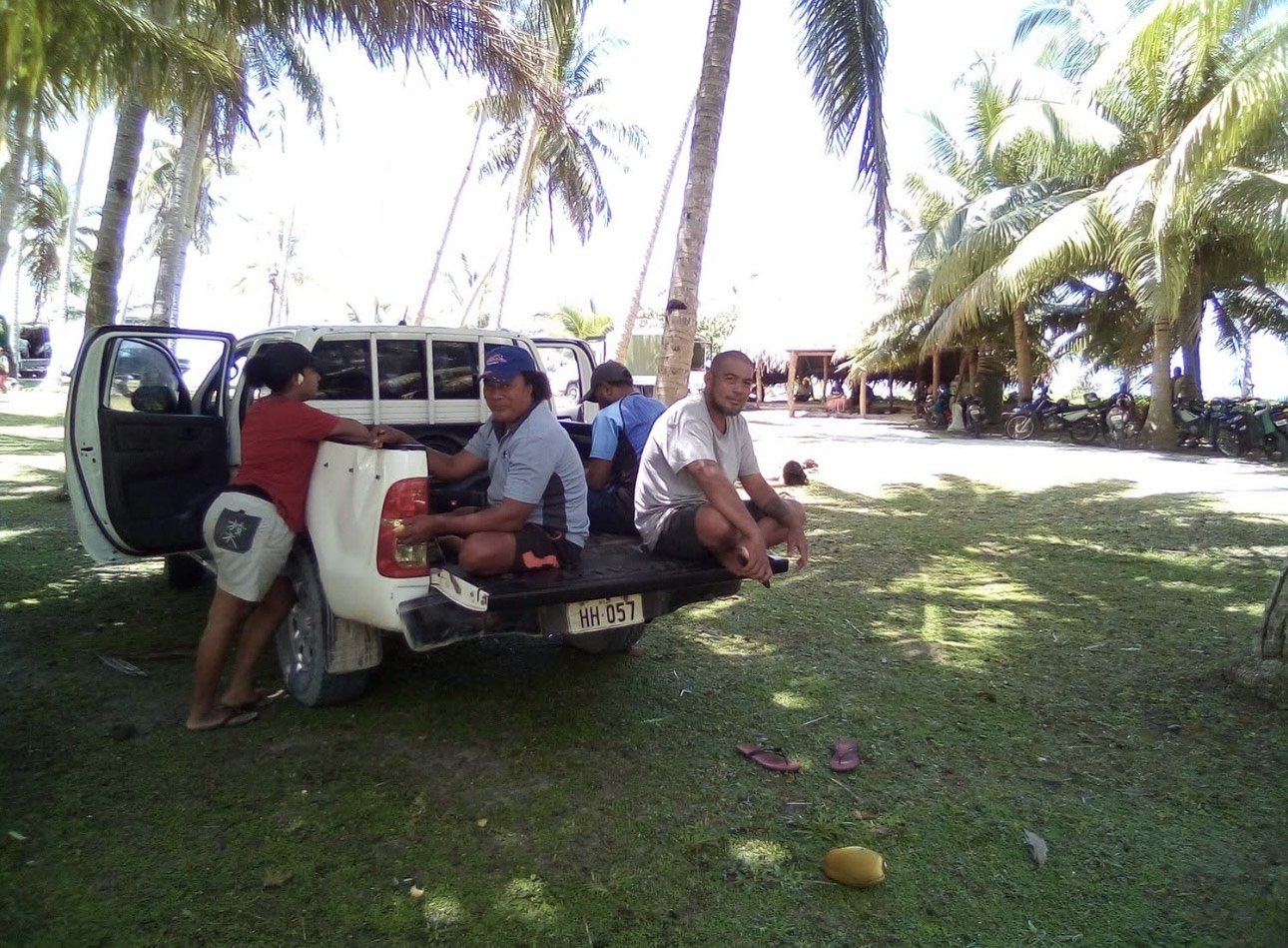
“The arrival of ships symbolizes a communal gathering where people are waiting together for the supplies they need”
Photo: A gathering at port (John Taukäve)
At the same time, with over 300 islands in Fiji, vessels are a constant in our lives, and the sounds they generate have become an issue. For Tonga, in one of the islands, there is a migration pattern around its archipelago for whales where they come to give birth and nurse. Incidentally, it is also the best place in the world to swim with whales. Carbon fueled ships and their noise could create issues for these creatures. Communities have established areas to avoid where vessels do not go to ensure that this migratory path is safeguarded. Additionally, because our Oceans region revolves around the equator, we have vast schools of fish with migratory patterns and there are specific routes that ships must take to ensure their migratory patterns and their habitats like lagoon areas and reefs and the deep sea remain protected.
Peoples of Oceania and their elders hold knowledge of the Oceans especially for areas to fish and areas that are sacred and taboo. These areas are no-go zones for ships upholding how we have protected the harmony between sound, sea life, and sustenance for our communities.
Just and Equitable Transition for Shipping
In our work at the IMO (International Maritime Organization), our Oceanic countries under the 6Pac bloc have been advocating for a just and equitable transition. The equitable part of the transition is to ensure that through an economic mechanism like a universal carbon levy, revenues would be distributed among those who are disproportionately impacted by climate change and shipping impacts, so they are not left behind. The other part of it is the ‘just’, which refers to everyone in the maritime sector like port workers and seafarers people in the community who rely on shipping. The human element of a just and equitable transition becomes alive in the discussion about justice – ensuring their livelihoods and ways of living with shipping are not impacted.
A decarbonized transition in shipping is expensive and will become even more expensive, especially for remote communities already paying the most. Because we are already carrying this burden, if shipping does not transition properly, developed countries will transition effectively and their leftover ships will be sent to developing states like ours where we will continue to pay more since these vessels will not fit within the transition framework, potentially generating more impacts to our communities, our livelihoods, our oceans and in this case, more noise for migratory species.. The Net-Zero framework we have been working on looks at revenue from the transition to be distributed equitably for developing countries like ours, and the just part is also key – the human element of the transition.
How do you reclaim space in global policy arenas?
We come to the international arena of policy because we cannot transform the shipping in our region without the global mechanisms in place. When we first started engaging in this policy space, it was very difficult to consolidate our presence. Our seat at the IMO was not occupied by us – we had to reclaim it and we did. We continue to engage, ensuring our voices and others that share our perspectives are heard. When we show up, we show up as peoples of Oceania both in our presence and in spirit be it in our traditional formal attire, in the way we deliver interventions or in the way we outreach through open dialogue, webinars and cultural ceremonies and practices with other member delegations.
In the past 10 years, getting to where we are presently has been a remarkable journey... The issues of greenhouse gas emissions from shipping were not even something to be considered back then; Oceania has led the way. It started with our leaders like the late Tony de Brum, Ambassador Albon Ishoda and many others – they paved the way for our work in the shipping international arena and ensured we put the interest of the community and people first. We also had to be mindful and aware of other influences – registries, consultants, advisors and how we could prioritise our interests when working in conjunction with these actors...
Our collaborative efforts have helped realize the ways we engage united despite the uniqueness of our own countries. We ensure there is a common fight for all of us. That coordination of the Pacific at the time branched out to other regions like the Caribbean, Central America and Africa – the 50+ proposal was an exemplary moment of what uniting different regions on common but moral grounds could achieve together... A culmination of relationship building fostered over the years.
Tell us about the power of chant, story, and cultural presence?
As part of my current doctoral research, I am looking to understand the narrative of how the IMO operates and how Oceanic countries like the 6Pac have shaken its foundations – in a decolonizing process of a methodology in Storyliving. With a background in performing arts, I felt so excited to do the first ever performance in plenary. The chant was a Rotuman Ki written by an elder of mine and sub-chief, Gagaj Taimanav for that moment – to be shared there. It was a challenge and acknowledgment. For someone like me from an island in the middle of the Pacific Ocean to chant in a plenary in a first-of-its-kind performance was a transformative moment of what the IMO could be like. That was one way of reinstating our Oceanic presence but also how we brought humanity back to the IMO.
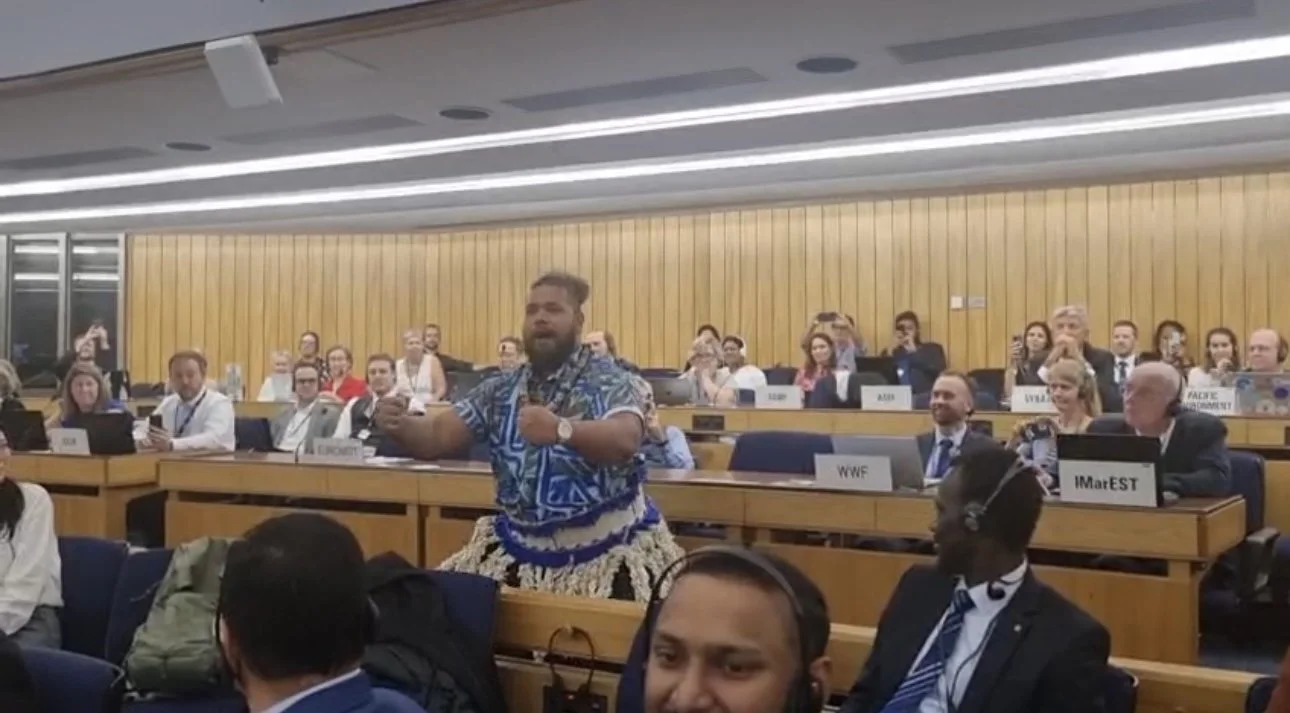
“...we should not only be talking about the technicalities and policies, but also considering the humanity of what the negotiations mean for communities like ours…”
Photo: John performing a chantsong called ‘Ki’ at the IMO ((John Taukäve)
The chantsong is called a ‘Ki’, which is almost like a challenge – a chant that in the time of our ancestors was used before a battle as a way to provoke their enemies. That is the power of words and sounds – when we chant these words they are supposed to tremble your opponent before you fight. The chant ensures you shake the very spiritual core of your opponent with an analogy to ants that when they go to battle, they are always in a unit together. Just like ants, when we show up in the international arena to transform shipping policies, we always strive to show up as one.
The Ki acknowledged the work everyone had been doing up to that very moment while challenging the core of the decision makers in the plenary to understand that we should not only be talking about the technicalities and policies, but also considering the humanity of what the negotiations mean for communities like ours.
Keeping Identity While Changing Systems
The IMO has been until recently out of sight and out of mind. The IMO is legally binding to regulate shipping and if we could impact its policies but also keep our identity in that space, that could connect to other spaces of engagement, creating a ripple effect, showing that it is possible to create change despite the forces against it.
It is deeply frustrating when it does not go our way, but there is still a lot of work to be done in that space and the 6Pac have created a legacy of leadership on the moral high ground.
It is really important that the story of what is happening at the IMO is shared from a different perspective like ours. Not only from a technical one, but from a community and cultural perspective of how we see the IMO negotiations – and ensure that this element of living our IMO story is shared. You want to share what is happening at the IMO with the fishermen in the village – not a 200-page report to the community. You want to engage human to human and ensure that those at the grassroots level are aware of what we are doing internationally to protect our oceans, our livelihoods but also to open our mindsets in understanding that what happens internationally trickles down regionally and to our national and community policies.
Our region has the Pacific Blue Shipping Partnership[1] – our regional efforts to decarbonize our fleet. It shows how we collectively work to impact international policy while transitioning our domestic fleet – translating what is international to our region. This act of translation makes clear that shipping is not just a technical matter – decarbonization and underwater noise are issues that must center coastal communities like ours in their solutions.
Grounding, Family, and the Responsibility to ‘Pull the Weeds’
My mother has been my biggest inspiration for my work in academia and maritime diplomacy. She has been very supportive, grounding me in the values I grew up with, reminding that: “When you go to these spaces and you challenge and fight for our voices, all while getting attention from everyone, always remember where you came from and ground yourself back.”
I always try to go back home to Fiji or Rotuma and sit down on a mat with my elders and family sharing stories. A proverbial saying that has always been a guide in my life goes “Hathat se puku, ka hä’hä’ se pupu”, which means you can read all the books, but don't forget to pull the weeds. Meaning you can find all the success in the world, get the best degree and books, be recognized internationally, but do not forget to go back to your community and pull weeds with them, ground yourself, humble yourself.
The blessings from heaven, my mother, my family and my community have brought me to where I am today – if it were not for them I would not be here today. We have to try to acknowledge our families and our communities who define who we are. We come as unique individuals, ever so part of a closely knit and vast Ocean whole of family, community, and rich saltwater ancestry.
