Press Release: New Research Warns That Proposed LNG Terminals in the Gulf of California Could Pose an Invasive Species “Super Spreader” Risk
Following warnings about stranded tankers in the Strait of Hormuz, Equal Routes and Nuestro Futuro release a brief and animated explainer of ballast water in the Gulf of California.
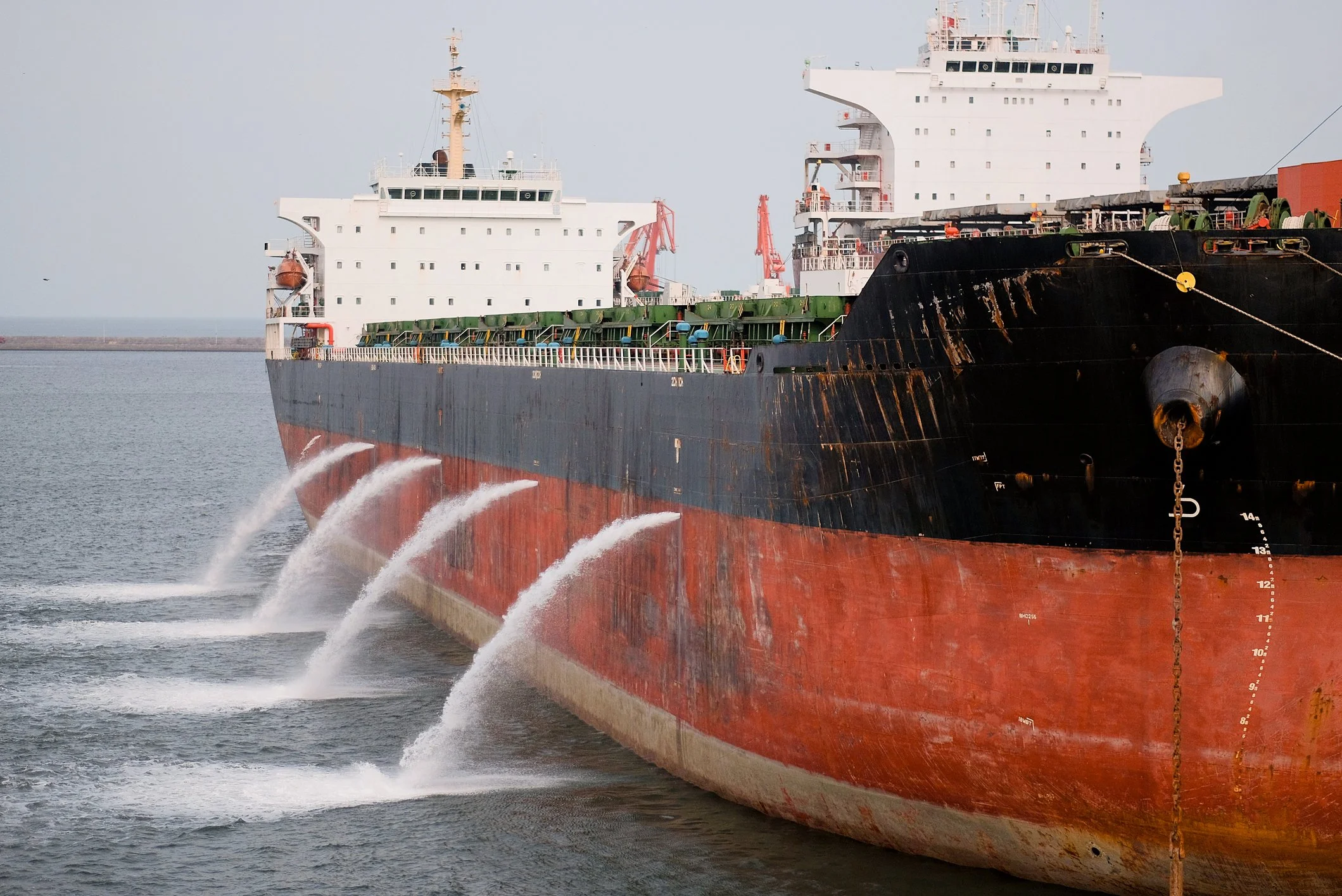
Photo: Ship discharging ballast water
La Paz, Baja California Sur, Mexico, August 13 — Equal Routes and Nuestro Futuro today released a new issue brief, Invasive Species Risk from LNG Tanker Traffic in the Gulf of California, and a companion animated explainer, warning that proposed LNG export terminals could introduce a wave of ship-borne invasive species into one of the world's most biodiverse marine regions. Released in both English and Spanish, the brief and video detail two vectors ships use to spread invasive species around the globe — ballast water and biofouling — and the risk they pose to the Gulf of California, a UNESCO World Heritage Site that holds 39% of the world's marine mammal species.
The release comes as global attention turns to a related danger playing out in the Persian Gulf: a recent academic paper warned that more than 1,500 tankers stranded amid the closure of the Strait of Hormuz have grown heavily fouled with algae, barnacles, tunicates, and other organisms — a potential invasive-species “super-spreader” event once the ships resume travel. Equal Routes and Nuestro Futuro say the Gulf of California faces the same two vectors — not from stalled ships, but from a coming increase in LNG tanker traffic.
The proposed Saguaro LNG export terminal alone could discharge up to 30 billion litres of ballast water annually at full capacity.
“Ships have been moving invasive species around the world for decades, but the Gulf of California hasn't faced this kind of shipping pressure before,” said Sandra Moguel, Legal Research & Coordination Lead, Equal Routes. “What's happening right now with the ships stranded in the Strait of Hormuz shows exactly what we're worried about here: once ballast water and biofouling start moving invasive species at scale, there's no realistic way to undo it. As current local and international regulations and prevention methods are insufficient to eradicate the damages, prevention has to come before the tankers arrive, not after.”
Between 1992 and 2019, aquatic and semi-aquatic invasive species cost Mexico an estimated $4.16 billion USD — 78% of all invasive-species damage in the country during that period. Once established, invasive species are almost never removed.
“The Gulf of California holds a third of the world's whale and dolphin species, and the communities along its shores depend on these waters for their food and their way of life,” said Nora Cabrera, General Director of Nuestro Futuro. “Decision-makers are not taking into account the irreversible impacts that invasive species can have on this ecosystem. We are talking about a point of no return, which would trigger irreversible ecological impacts. This brief gives us the evidence we need to keep pushing for real protections before LNG traffic begins.”
Assets
Media Contacts
Rachel Wang · Equal Routes · rachel@equalroutes.ca
Mariana Domínguez · Nuestro Futuro · mariana@nuestrofuturo.mx
About Equal Routes & Nuestro Futuro
Equal Routes is an organization working to build a decarbonized maritime industry that focuses on human rights, ocean health, and climate equity.
Nuestro Futuro is a Mexican non-profit organization that promotes climate and environmental justice by halting the expansion of fossil fuels, protecting biodiversity, and strengthening community power.
